
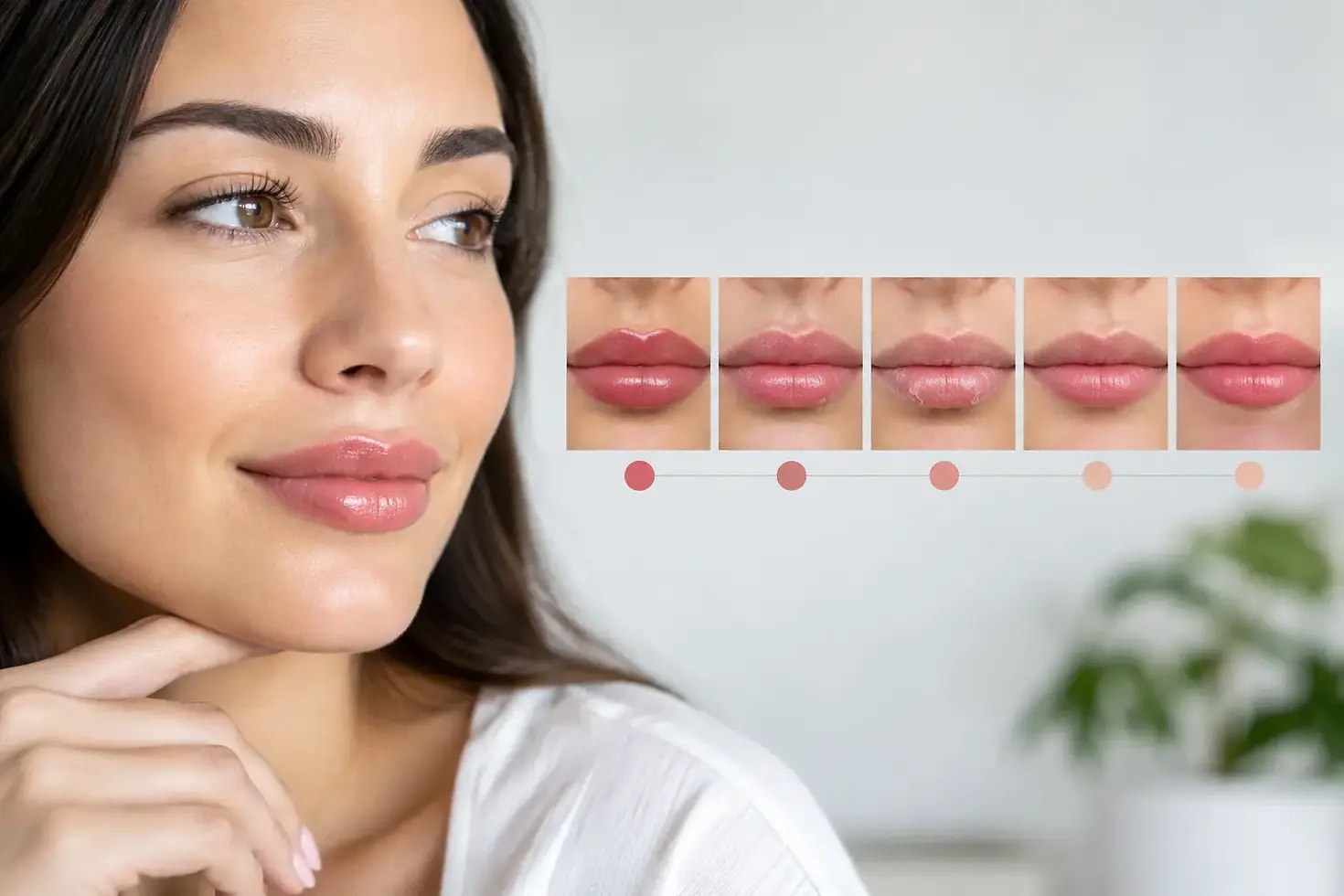
How Lip Blush Heals: A Day-by-Day Timeline

The morning after lip blush, your lips may look fuller, brighter, and more defined than you expected. That first impression is not the finished result. Understanding how lip blush heals helps you move through each phase with confidence and protect the soft, customized color your artist designed for you.
Lip blush is a cosmetic tattoo that places pigment beneath the surface of the lips to enhance their natural tone, balance uneven color, and create a more polished outline. It is not intended to look like opaque lipstick. The final effect should feel refined, fresh, and tailored to your unique facial profile. Healing is the period that allows that initial color to soften into precisely that kind of result.
How Lip Blush Heals From Day One to Week Six
Every client heals at a slightly different pace. Skin response, hydration, lifestyle, immune health, and aftercare all influence the process. Still, most lip blush healing follows a recognizable timeline.
The first 24 hours: Bright color and mild swelling
Immediately after your appointment, lips can appear more saturated, more sharply outlined, and slightly swollen. This is a normal response to the procedure and usually settles quickly. The pigment will look warmer or deeper than the healed shade during this stage, especially if you selected a subtle neutral pink, rose, or nude tone.
Your artist will give you specific aftercare instructions based on your treatment and skin needs. In general, keep your lips clean, avoid touching them unnecessarily, and use only the recommended aftercare product. The goal is to support a calm healing environment without over-moisturizing or introducing bacteria.
Days two through four: Color deepens, then begins to soften
As the lips recover, color may look darker before it gets lighter. Some clients also notice dryness, tightness, or a slightly textured feeling. This can be surprising when you chose a delicate, natural-looking shade, but it is part of the normal early healing cycle.
Resist the urge to assess your final color too soon. At this point, your lips are still processing the treatment. The surface appearance does not yet reflect the pigment that will remain once healing is complete.
Days four through 10: Flaking and the “too light” stage
Light flaking or peeling commonly begins during the first week. It may happen evenly, or it may appear in small areas at different times. Do not pick, rub, exfoliate, or pull at any dry skin. Removing flakes prematurely can interfere with pigment retention and create uneven healing.
Once flaking finishes, many clients experience what is often called the ghosting phase. The lips can look much lighter than anticipated, sometimes as if the color disappeared altogether. This is temporary. As the skin continues to regenerate, the pigment gradually reappears and settles into a softer version of the original design.
Weeks two through six: The color returns and settles
Over the following weeks, color slowly blooms back through the skin. It becomes more even, more natural, and less intense than it looked immediately after the procedure. A healed lip blush result often has a translucent, lip-like quality rather than a dense makeup finish.
By four to six weeks, you will have a clearer view of your retained color, border definition, and overall balance. Some areas may retain pigment differently, particularly on lips with significant natural pigmentation, dryness, prior filler, or a history of sun exposure. That is one reason a perfection session is commonly planned after the initial healing period.
Why Healed Lip Blush Looks Softer Than Fresh Lip Blush
Fresh pigment sits in skin that is temporarily inflamed, which amplifies color and definition. As the tissue calms and the epidermis renews, the visual intensity changes. A beautifully healed lip blush should complement your complexion and natural lip tone, not compete with either.
This is where customization matters. A skilled artist considers your existing lip color, undertone, facial features, and desired level of enhancement before selecting pigment. For clients with cooler-toned or darker areas of natural lip pigmentation, neutralization may be recommended before, or as part of, achieving the target shade. The treatment plan depends on your lips, not a one-size-fits-all color chart.
A soft healed result is also why photos taken immediately after an appointment should not be used to judge the final outcome. Think of fresh lip blush as the first layer of the process. The settled color is the artistry you will wear day to day.
Aftercare That Supports Even Healing
Your personalized instructions should always come first. These general habits can help protect your investment while your lips heal:
Keep lips clean and apply only the aftercare product recommended by your artist.
Avoid picking, scrubbing, kissing with pressure, or friction against the healing skin.
Skip lipstick, gloss, lip liner, and active skincare products on or around the lips until you are cleared to resume them.
Avoid swimming pools, hot tubs, saunas, steam rooms, and intense sweating during the initial healing period.
Protect your lips from direct sun exposure after healing, since UV exposure can affect the appearance of cosmetic tattoo pigment over time.
Hydration also makes a difference. Drink water consistently and avoid allowing your lips to become excessively dry. At the same time, more product is not always better. A thin, appropriate layer of approved aftercare is usually preferable to repeatedly coating the lips throughout the day.
If you have a history of cold sores, tell your artist before booking. Lip tattooing can trigger an outbreak in people who are prone to them, and your medical provider may recommend preventative antiviral medication. This is a planning step, not something to leave until the day of your appointment.
What Is Normal, and What Deserves a Call
Temporary swelling, tenderness, dryness, flaking, and shifting color are common parts of healing. Mild unevenness during the first weeks is also not unusual, particularly while different sections of the lips shed at different times.
Contact your artist promptly if you have questions about your healing pattern or are unsure whether a product is appropriate. For signs of a medical concern, such as severe swelling, spreading redness, significant pain, fever, or symptoms of an allergic reaction, seek medical care. Your safety and comfort should never be secondary to the cosmetic result.
Your Perfection Session Is Part of the Process
Lip blush is often a multi-step service, not a single appointment with a finished result on day one. At a follow-up session, your artist can evaluate how your skin retained pigment, refine any areas that healed lighter, and make thoughtful adjustments to color or definition.
Some clients need minimal refinement. Others benefit from additional work because their natural lip tone, skin characteristics, or healing response requires it. Neither experience means something went wrong. Cosmetic tattooing is individualized artistry, and the most natural results are built with patience rather than rushed for immediate intensity.
At Golden Compass, lip blush is approached as a considered enhancement: a custom color that brings softness, balance, and ease to your everyday routine. Give the healing process the time it asks for, follow your aftercare closely, and let the final shade reveal itself gradually. The most elegant results are rarely the loudest on day one.


Comments